FemiPro Reviews: What This Bladder and Urinary Supplement Contains and What the Evidence Supports
By the Well Naturalis Editorial Team · Updated October 2026
Disclosure: this article contains affiliate links. If you buy through them, we may earn a commission at no extra cost to you. It does not change what we write.
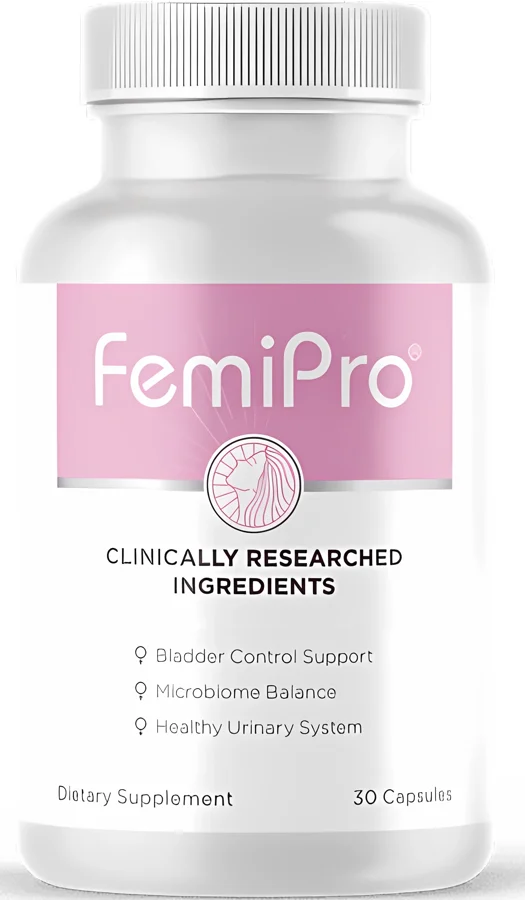
FemiPro at a Glance
| Form | Capsules — 30 per bottle; label says 1 a day with 6 to 8 oz of water |
| Core ingredients | 350 mg herbal blend (Mimosa pudica seed, cranberry 30% PAC, bearberry/uva-ursi leaf, berberine HCl) + 50 mg blend of 5 Lactobacillus strains |
| Made in | USA, in an FDA-registered facility (label badge), from foreign and US ingredients |
| Guarantee | 60 days, counted from the delivery date |
| Shipping (US) | Free on every bundle, about 5 to 7 working days |
| Main caution | Not a treatment for a UTI; bearberry is meant for short-term use — see a doctor for urinary symptoms |
Leaking a little when you laugh, sneeze or lift something, rushing to the bathroom with almost no warning, or dealing with one urinary tract infection after another: these are some of the most common health complaints among adult women, and they are also among the least talked about. Many women live with them for years before mentioning them to a doctor.
FemiPro is a once-a-day capsule marketed to women who want to support bladder control and the balance of bacteria in the urinary and vaginal tract. Its formula pairs four plant ingredients — Mimosa pudica, cranberry, bearberry (uva-ursi) and berberine — with five Lactobacillus probiotic strains. In this review we go through the full label, separate the marketing story from what research actually shows, flag the safety points that matter, and lay out the price and refund terms so you know exactly what you are signing up for.
→ See the full FemiPro formula on the official website
What Is FemiPro?
FemiPro is a dietary supplement sold in bottles of 30 capsules, which is a one-month supply at the suggested dose of one capsule a day. The front of the bottle lists three goals — bladder control support, microbiome balance and a healthy urinary system — and the sales page describes it as natural, non-GMO, stimulant-free and easy to use.
The product label is published on the official site, which is more transparency than many products in this category offer. It shows two blends: a 350 mg "UTI Herbal Blend" and a 50 mg probiotic blend. The capsule shell is gelatin, so FemiPro is not suitable for vegetarians or vegans. The other ingredients are brown rice flour, magnesium stearate, olive oil and silicon dioxide.
According to the label, FemiPro is made in the USA from foreign and domestic ingredients, in a facility that carries an FDA-registered badge and a GMP (Good Manufacturing Practice) seal. It is distributed by a company in Tallmadge, Ohio. Keep in mind that an "FDA-registered facility" only means the factory is listed with the agency. The FDA does not approve dietary supplements or check that they work before they are sold, and the label itself carries the standard statement that its claims have not been evaluated by the FDA.
How FemiPro Is Said to Work: Claim vs Evidence
The sales page builds its case around the urinary microbiome. The idea is that harmful bacteria in the bladder, urinary tract and vagina can irritate and overstimulate the bladder muscle, leading to sudden leaks, and that tipping the balance back toward beneficial bacteria can reduce those episodes.
There is a real field of research behind the first half of that story. For decades the bladder was assumed to be sterile, but newer testing methods have found bacterial communities in the urine of healthy women. Studies published in the American Journal of Obstetrics and Gynecology and the International Urogynecology Journal — several of which the brand lists on its own references page — found that the bacterial mix in women with urge or mixed incontinence tends to differ from that of women without symptoms, for example with fewer Lactobacillus species.
The second half is where the evidence stops. Those studies show an association, not cause and effect: nobody has yet shown that changing the urinary microbiome with a supplement reduces leaks. Incontinence also has well-understood causes that have nothing to do with bacteria — weakened pelvic floor muscles after pregnancy and childbirth, falling estrogen after menopause, excess weight, chronic cough, some medications, nerve conditions and an overactive bladder. A probiotic-and-herb capsule does not address those.
Put simply, the microbiome theory is interesting and still being studied. It is a reasonable reason to be curious about FemiPro, not proof that it will change your symptoms.
FemiPro Ingredients and What the Research Says
The label gives the total weight of each blend, but not the amount of each individual ingredient, and it does not state a probiotic count in CFU (colony-forming units). That matters, because the studies below used specific doses and strains, and we cannot tell how closely FemiPro matches them.
1. Mimosa Pudica Seed Extract
Mimosa pudica, the "sensitive plant" whose leaves fold when touched, is used in traditional medicine in Asia. Its seeds are popular in "gut cleanse" products. The research the brand points to is laboratory work showing antioxidant and antibacterial activity in test tubes. There are no human studies of Mimosa pudica for bladder control, urinary infections or the urinary microbiome, so its role in the formula is speculative.
2. Cranberry Extract (Standardized to 30% PACs)
Cranberry is the best-researched ingredient here. Its proanthocyanidins (PACs) appear to make it harder for some E. coli bacteria to stick to the bladder wall. A 2023 Cochrane review of 50 trials concluded that cranberry products probably reduce the risk of repeat symptomatic UTIs in women who get them often, while the benefit was less clear in other groups. Note what that does and does not mean: cranberry may help with preventing recurrent infections, but it does not treat an active infection, and there is no good evidence that it improves bladder leaks or urgency. FemiPro's label confirms the 30% PAC standardization but not the amount of cranberry per capsule.
3. Bearberry (Uva-Ursi) Leaf
Bearberry leaf has been used for bladder infections in Europe for centuries. It contains arbutin, which the body converts into compounds with antibacterial activity in the urine. The evidence is mixed: a German randomized trial published in 2021 compared uva-ursi with the antibiotic fosfomycin in women with uncomplicated cystitis and found that the herbal treatment was not as effective, with more women needing antibiotics later.
Bearberry also comes with a usage limit. The European Medicines Agency's herbal monograph supports it only for short courses for mild bladder symptoms, generally no longer than a week, and advises against it in pregnancy, breastfeeding, kidney disease and in children. Taking it every day for months, as a daily supplement implies, is outside that guidance. FemiPro does not publish how much bearberry each capsule contains, which makes this the ingredient to discuss with a doctor or pharmacist.
4. Granular Berberine Hydrochloride (8% Extract)
Berberine is a yellow plant compound found in goldenseal, barberry and Oregon grape. It is widely studied for blood sugar and cholesterol, and it has antimicrobial activity in the lab. The bladder study on FemiPro's reference list was done in diabetic rats, so it says little about women with leaks. In people, berberine can cause stomach upset or constipation, can lower blood sugar, and interacts with a number of medicines because it affects liver enzymes that break drugs down. The NIH's National Center for Complementary and Integrative Health notes that berberine should not be used in pregnancy or while breastfeeding.
5. Probiotic Blend (5 Lactobacillus Strains, 50 mg)
The probiotic blend contains L. crispatus LCr86, L. acidophilus LA88, L. plantarum N13, L. gasseri LG08 and L. casei LC16. Lactobacilli, and L. crispatus in particular, dominate a healthy vaginal microbiome, and low levels are linked to bacterial vaginosis and recurrent UTIs. That makes the choice of species sensible.
The best human evidence for this idea, however, comes from a different product: a small phase 2 trial in which an L. crispatus strain given as a vaginal suppository reduced repeat UTIs. Whether swallowed probiotics reach and colonize the urinary tract in useful numbers is far less certain, and the specific strains in FemiPro do not appear to have published trials for bladder control. With no CFU count on the label, it is also impossible to compare the dose with anything studied. Probiotics are generally safe for healthy people, but they are not recommended without medical advice for anyone with a weakened immune system.
Curious about a cranberry-and-probiotic formula for urinary health? Check FemiPro's current bundles on the official site.
Visit the Official FemiPro Website →Pros and Cons of FemiPro
Pros
- Full label with blend weights is published on the official site
- Includes cranberry standardized to 30% PACs, the best-supported ingredient for recurrent UTIs
- Five named Lactobacillus strains, including L. crispatus
- Simple routine: one capsule a day
- Made in the USA in an FDA-registered facility, according to the label
- Free US shipping, one-time payment with no autoship, 60-day guarantee
Cons
- Individual doses and the probiotic CFU count are not disclosed
- No published trial of FemiPro itself for bladder leaks
- Bearberry is meant for short courses, not months of daily use
- Berberine interacts with several medicines and is not for pregnancy
- Gelatin capsule — not vegetarian
- Refunds require returning all bottles at your own shipping cost
Who Might Consider FemiPro (and Who Should Not)
FemiPro is aimed at adult women who:
- have already seen a doctor about their urinary symptoms and want a supplement alongside their care plan
- are interested in cranberry and probiotics as part of their routine for urinary and vaginal health
- prefer a single daily capsule to several separate products
- are not pregnant or breastfeeding and do not take medicines that interact with berberine or bearberry
It is not a good fit if you are pregnant, trying to conceive or breastfeeding; have kidney or liver disease; take diabetes medicine, blood thinners such as warfarin, cyclosporine or other drugs with narrow dosing ranges; or are under 18, which the label itself excludes.
When to See a Doctor About Urinary Symptoms
This is the most important section of the review. Bladder leaks and urinary discomfort are common, but they are not something to manage with a supplement alone, and some symptoms need prompt medical attention. Please book an appointment with your doctor, gynecologist or a urologist if you have:
- burning or pain when you urinate, cloudy or strong-smelling urine, or a constant urge to go — possible signs of a UTI, which usually needs antibiotics
- fever, chills, nausea, or pain in your back or side — possible signs that an infection has reached the kidneys, which is urgent
- blood in your urine, even once
- three or more UTIs in a year, or infections that keep coming back after treatment
- new leaks, sudden urgency or a change in your bladder habits without an obvious cause
- urinary symptoms during pregnancy, or together with numbness, weakness or back problems
A doctor can check for infection, prolapse, diabetes, medication side effects and other causes, and can recommend options with strong evidence. For stress and mixed incontinence, a Cochrane review found that pelvic floor muscle training, ideally guided by a pelvic health physical therapist, often improves or resolves leaks. Bladder training, weight loss, vaginal estrogen after menopause and prescription treatments for overactive bladder are other proven routes. A supplement, at most, sits alongside these — never instead of them.
Safety and Side Effects
No serious side effects have been publicly reported for FemiPro as a finished product, but that is not the same as having been studied. Looking at its ingredients, the most likely issues are digestive: berberine can cause cramps, diarrhea or constipation, and some people notice bloating when they start a probiotic. Cranberry is generally well tolerated, although it may interact with warfarin, and people with a history of kidney stones should ask their doctor about concentrated cranberry products.
The two ingredients that deserve real caution are bearberry and berberine. Bearberry's active compound is converted to hydroquinone in the body, which is why health authorities limit it to short courses. Berberine can lower blood sugar and change how the liver processes many medicines. Neither should be used in pregnancy or while breastfeeding. The official FAQ itself advises showing the bottle to your doctor if you have a medical condition or take prescription medication, and that is good advice — bring the label to your appointment.
How to Use FemiPro
The label directions are simple: take one capsule a day with 6 to 8 ounces of water, or as directed by a healthcare professional, and do not exceed that dose. Taking it with a meal may reduce any stomach upset from berberine. The brand's refund page suggests using the product for at least three months before judging results.
If your doctor agrees you can try it, a short bladder diary helps you judge honestly: note how many times you urinate during the day and night, how many leaks you have and how urgent the need feels, for a few days before you start and again after six to eight weeks. Because bearberry is normally used for short periods, ask your doctor how long it is reasonable for you to take a product that contains it.
FemiPro Price, Shipping and Guarantee
FemiPro is sold in three bundles on its official order page. The per-bottle prices are shown inside images on the page, so confirm the exact total at checkout. As checked in October 2026:
| Bundle | Price shown on the official page |
|---|---|
| 1 bottle (30-day supply) | $69 per bottle |
| 3 bottles (90-day supply) | $59 per bottle (about $177 total) |
| 6 bottles (180-day supply) | $49 per bottle (about $294 total) + 2 free e-books |
| US shipping | Free on every bundle, about 5 to 7 working days |
| Canada, UK, Ireland, Australia, NZ | $15.95 shipping, 10 to 15 working days |
| Billing | One-time payment, no autoship or subscription |
| Guarantee | 60 days from the delivery date |
The two bonus e-books offered with the 6-bottle bundle are a guide to digestion and gut health and a guide about intimacy in relationships. They are digital downloads, not part of the supplement.
The shipping policy says you should receive a tracking email within 60 hours of ordering. The refund policy gives you 60 days from the day the package is delivered. To use it, email the support address with "Refund Request" in the subject line, then send back all bottles — opened, unopened or empty — with the packing slip and a note with your name, email and order number. The return address is in Tallmadge, Ohio. Return postage is paid by the customer, and the policy says refunds are processed within a few days of the package arriving, with 5 to 10 days for the money to appear on your statement. Keep your tracking number and a copy of your email.
→ Check today's FemiPro price and bundles on the official website
What We Saw on the Official FemiPro Order Page (October 13, 2026)
On October 13, 2026 we opened the official order page ourselves and followed the checkout up to the payment step, without placing an order, to record exactly what a buyer sees. The screenshots below are unedited crops from that visit.
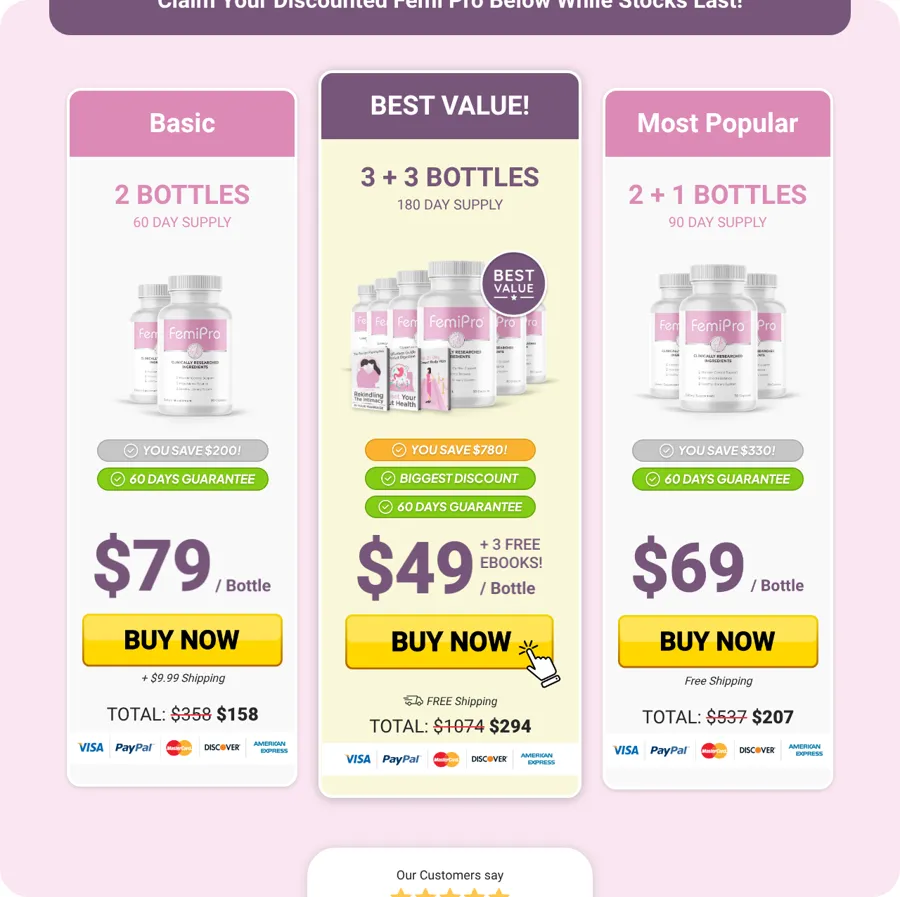
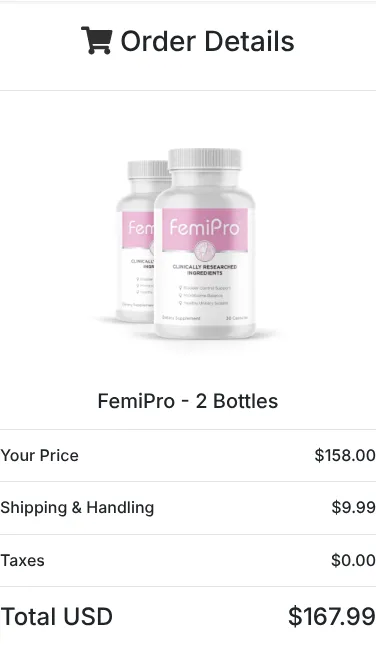
- At the secure checkout the bundles came to: FemiPro - 2 Bottles: $158.00 plus $9.99 shipping, $167.99 total; FemiPro - 2+1 Bottles: $207.00 with free shipping; FemiPro - 3+3 Bottles: $294.00 with free shipping. Tax showed as $0.00.
- Note the difference: the order page we reached on this date offered 2, 2 + 1 and 3 + 3 bottle bundles, while other FemiPro pages show 1, 3 and 6 bottle options at $69, $59 and $49 per bottle. Check which bundles your order page shows and confirm the total before paying.
- Contact address listed on the official site: contact@femipro-product.com.
Where to Buy FemiPro
FemiPro is sold through its official website, which links to the official order page for checkout. Bottles listed on marketplaces or unknown stores may be old stock or imitations and are unlikely to be covered by the 60-day refund policy. Ordering from the official page is the only way we know of to get the published guarantee and free US shipping.
FemiPro vs Other Options for Bladder Health
Most bladder supplements fall into two groups. Cranberry or D-mannose products target recurrent UTIs, and pumpkin seed or soy isoflavone products target urgency and overactive bladder. FemiPro sits mainly in the first group, adding probiotics and two traditional antimicrobial herbs. If recurrent UTIs are your main concern, a plain cranberry product with a stated PAC dose is easier to compare with research. If leaks when you cough or exercise are the issue, pelvic floor training will almost certainly do more than any capsule. FemiPro's appeal is convenience: several popular urinary ingredients in one daily pill.
Final Verdict
FemiPro has a few things going for it. The label is published, the formula includes cranberry standardized to PACs — the ingredient with the most solid evidence for recurrent UTIs — and the probiotic species are the ones most associated with a healthy vaginal microbiome. Free US shipping, no autoship and a 60-day guarantee lower the financial risk.
The limits are just as clear. The microbiome explanation for bladder leaks is promising research, not settled science. Individual doses and the probiotic count are not disclosed, bearberry is meant for short-term rather than daily use, and berberine brings real drug interactions. If your doctor has ruled out infection and other causes, and you are not pregnant and not on interacting medication, FemiPro is a reasonable thing to try under its guarantee with modest expectations. If you have symptoms of a UTI or any red-flag sign listed above, see a doctor first. Supplements can support a routine; they do not cure bladder problems.
Frequently Asked Questions (FAQs)
Is FemiPro FDA-approved?
No. The FDA does not approve dietary supplements. FemiPro's label says it is made in an FDA-registered facility, which concerns where it is manufactured, not proof that it works.
Can FemiPro treat a urinary tract infection?
No. An active UTI usually needs antibiotics prescribed by a doctor. Cranberry may help reduce repeat infections in some women, but it does not clear an infection. See a doctor if you have burning, fever, back pain or blood in your urine.
How long does FemiPro take to work?
The brand suggests at least three months of daily use. There are no published trials of FemiPro itself, so keep a simple bladder diary and review it with your doctor after six to eight weeks.
Does FemiPro have side effects?
No serious side effects have been publicly reported. Its ingredients can cause stomach upset, and berberine and bearberry have medication interactions and are not for pregnancy or breastfeeding. Ask your doctor before starting it.
Is FemiPro safe to take long-term?
That has not been studied. Bearberry is normally recommended only for short courses, so talk to your doctor or pharmacist about how long to take a product that contains it.
Is FemiPro a subscription?
No. The official site states that each order is a one-time payment with no autoship.
What if FemiPro doesn't work for me?
You can request a refund within 60 days of delivery by emailing support with "Refund Request" in the subject and returning all bottles with the packing slip. Return shipping is at your cost.
Want to compare the current FemiPro bundles? The official site lists today's prices.
Visit the Official FemiPro Website →References
- Williams G, et al. Cranberries for preventing urinary tract infections. Cochrane Database Syst Rev. 2023;4(4):CD001321.
- Dumoulin C, Cacciari LP, Hay-Smith EJC. Pelvic floor muscle training versus no treatment, or inactive control treatments, for urinary incontinence in women. Cochrane Database Syst Rev. 2018;10(10):CD005654.
- Gágyor I, et al. Herbal treatment with uva ursi extract versus fosfomycin in women with uncomplicated urinary tract infection in primary care: a randomized controlled trial. Clin Microbiol Infect. 2021;27(10):1441-1447.
- European Medicines Agency (HMPC). European Union herbal monograph on Arctostaphylos uva-ursi (L.) Spreng., folium.
- Stapleton AE, et al. Randomized, placebo-controlled phase 2 trial of a Lactobacillus crispatus probiotic given intravaginally for prevention of recurrent urinary tract infection. Clin Infect Dis. 2011;52(10):1212-1217.
- Price TK, et al. Bladder bacterial diversity differs in continent and incontinent women: a cross-sectional study. Am J Obstet Gynecol. 2020;223(5):729.e1-729.e10.
- Komesu YM, et al. The urinary microbiome in women with mixed urinary incontinence compared to similarly aged controls. Int Urogynecol J. 2018;29(12):1785-1795.
- National Center for Complementary and Integrative Health (NCCIH). Cranberry; Goldenseal; Probiotics — What You Need to Know.
- NIH Office of Dietary Supplements. Probiotics — Fact Sheet for Health Professionals.
- National Institute of Diabetes and Digestive and Kidney Diseases (NIDDK). Bladder Control Problems in Women (Urinary Incontinence).
This review is for general information only and is not medical advice. Product details (ingredients, prices, guarantee) come from the official FemiPro pages as checked in October 2026; they can change, so confirm them at checkout. Talk to your doctor before starting any supplement, especially if you take prescription medication or have a health condition.